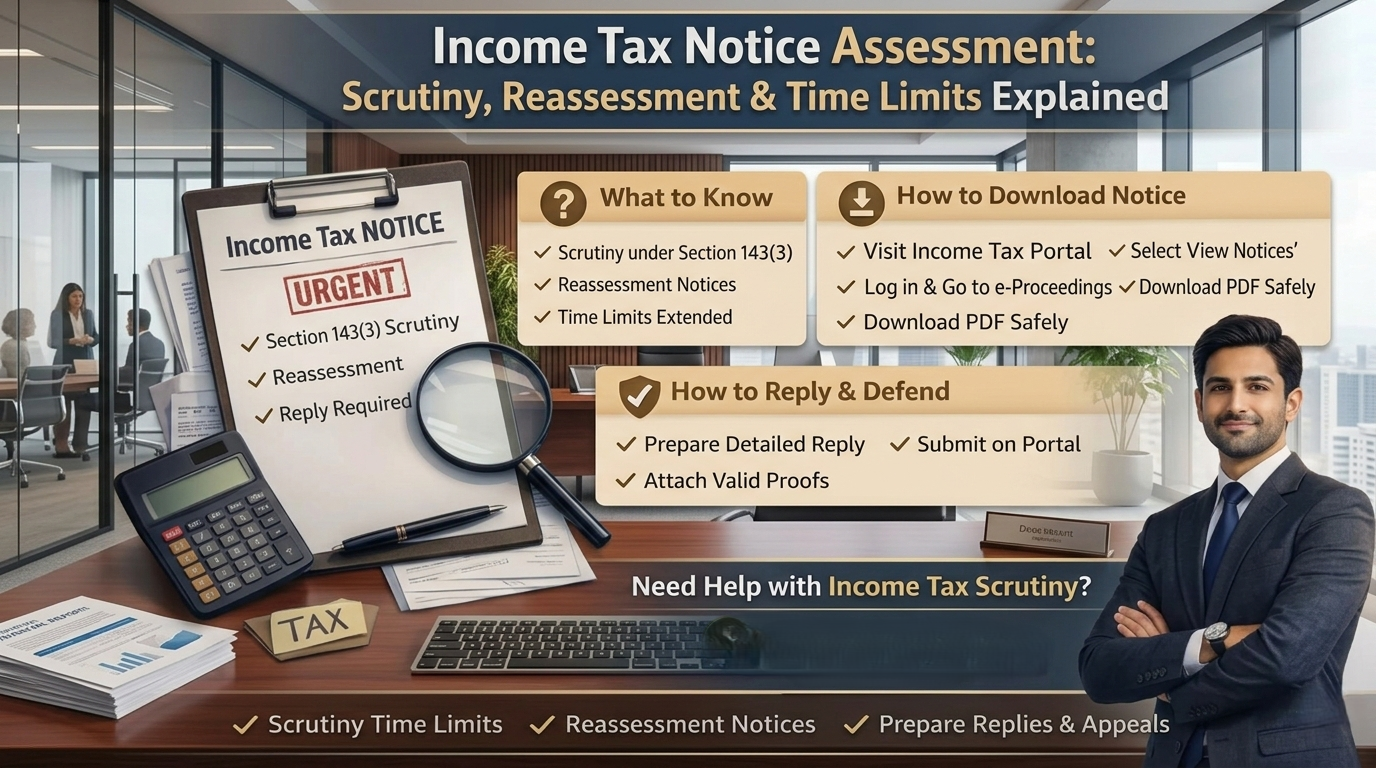
The income tax assessment process involves the review of a taxpayer's return by the Income Tax Department (ITD) to ensure its accuracy and adherence to legal standards. This process ultimately determines the taxpayer's final tax liability or any refund owed. A key aspect of specific assessments, especially the detailed scrutiny and best judgment assessments, is the opportunity for taxpayers to present their case during a hearing.
Types of Income Tax Assessments
There are several types of assessments under the Income Tax Act, 1961:
Self-Assessment (Section 140A): Here, the taxpayer determines their income and tax obligations, settling the tax amount prior to submitting the ITR.
Summary Assessment (Section 143(1): The ITR undergoes an initial automated review by the Centralized Processing Centre (CPC) to identify any arithmetic mistakes or inaccuracies in claims based on the data available, such as Form 26AS or AIS. At this stage, there is typically no personal hearing unless an adjustment is proposed. In such cases, the taxpayer will have the chance to respond online within 30 days.
Scrutiny Assessment (Section 143(3)): This is an in-depth review of the return aimed at verifying the accuracy of several claims, deductions, and other related matters, as initiated by a notice under Section 143(2). The process entails a comprehensive analysis of accounts and documents, and traditionally required personal appearances.
Best Judgment Assessment (Section 144): A taxpayer may face assessment when they do not respond to notices, such as failing to file a return or provide requested documents. In such cases, the Assessing Officer (AO) will make a judgment based on the available information. However, it's important that the taxpayer is given a chance to present their side before any final decision is made.
Income Escaping Assessment (Section 147): This process begins when the Assessment Officer suspects that certain income may have gone unassessed. A notice is then issued under Section 148, after conducting an inquiry under Section 148A. This inquiry allows the taxpayer the chance to provide reasons why the notice should not be issued.
Block Assessment(Section 158B): Block Assessment is a tax evaluation process under the Income Tax Act, specifically outlined in Sections 158B to 158BI. This procedure kicks off when the Income Tax Department conducts a search, often under Section 132, fuelled by suspicions of undisclosed income. The assessment spans a "block period" covering the last six financial years, enabling a comprehensive review of all income, expenses, and deductions during this timeframe. When it comes to Block Assessments, any undisclosed income that comes to light is taxed at a steep rate of 60%. Moreover, strict penalties may be levied if income isn’t declared within the designated period. This process is designed to provide a thorough examination of financial activities, thereby preventing tax evasion and ensuring compliance with tax regulations. Additionally timelines for its completion, guidelines for addressing undisclosed income related to third parties, and measures to protect against certain penalties and interest. This makes it an essential tool for tax authorities in upholding fiscal integrity.
The Role of Hearings
Hearings are crucial to the principles of natural justice in the assessment process.
Faceless Assessments: The existing system mainly employs a “faceless” assessment process, governed by Sections 144B and 151A, which facilitates entirely electronic communication between taxpayers and tax authorities, thereby typically removing the requirement for in-person appearances.
Video Conferencing: If a taxpayer asks for a personal hearing during a faceless assessment, it will only take place via video conferencing. This process allows for their voice to be heard while keeping the anonymity and efficiency that the faceless system is designed for.
Taxpayer Rights: The taxpayer, or someone they’ve authorized like a Chartered Accountant or an advocate, is allowed to present their arguments and any supporting evidence during these hearings.
Consequences of Non-Compliance: Neglecting to respond to notifications or engage in the hearing process may result in a best judgment assessment according to Section 144, along with possible penalties.